zaterdag 5 augustus 2023
vrijdag 4 augustus 2023
Le curé d'Ars, un saint pas comme les autres - Un hymne à l'amour


H. Jean Baptiste Marie Vianney - Pastoor van Ars (1786 1859) Alles geven en niets ontvangen.

Jean Baptiste Marie Vianney of Johannes Maria Vianney (Dardilly (bij Lyon), 8 mei 1786 - Ars-sur-Formans, 4 augustus 1859) is een rooms-katholieke heilige. Tot aan zijn dood was hij gedurende 41 jaar priester van de parochie van het Franse dorpje Ars-sur-Formans, zodat hij ook bekend staat als de Pastoor van Ars.
Jean-Marie groeide op als kind in een boerenfamilie. Zijn kinderjaren hadden een sterke invloed op zijn geestelijke leven als priester. De devote geloofsbeleving van zijn ouders, vooral die van zijn moeder, gaf hem een rotsvast geloof . In het ouderlijk huis leerde hij te bidden en ook te zorgen voor de armen, doordat er dagelijks daklozen en armen uitgenodigd waren aan de familietafel.
In 1806 opende de pastoor Balley van Écully een klein seminarie, waar Jean-Marie ging studeren. Hij was een matige leerling, maar zijn priesterroeping werd vanwege zijn vroomheid niet betwijfeld. Hoewel hij niets van de Latijnse lessen begreep, werd hij uiteindelijk priester gewijd en als kapelaan naar Écully gestuurd. Toen pastoor Balley daar overleed, werd Jean-Marie Vianney benoemd in Ars-sur-Formans, een klein dorpje in de buurt van Lyon in het huidige departement Ain. In februari 1818, waarschijnlijk de 11de, kwam Jean-Marie Vianney aan in Ars. Daar wist hij door zijn preken, zijn vroomheid en zijn faam van heiligheid velen tot geloof en boetvaardigheid op te roepen. Hij bekommerde zich om de armen. Alles gaf hij weg. Alles geven en niets houden was zijn motto. Uit heel Frankrijk kwamen mensen om bij de Pastoor van Ars te kunnen biechten, hem een gunst of een raad te vragen. Hij stierf in Ars op 4 augustus 1859, na een leven van boete en gebed, zonder ooit zijn dagelijkse taken als priester en als pastoor te verwaarlozen.
Jean-Marie Vianney werd in 1905 zalig verklaard en in hetzelfde jaar benoemd tot patroonheilige van alle priesters van Frankrijk door paus Pius X. In 1925 werd hij door paus Pius XI heilig verklaard. In 1929 werd hij uitgeroepen tot beschermheilige van alle parochiegeestelijken.
Het lichaam van de heilige is nog geheel intact. Zijn relieken rusten in de basiliek van Ars-sur-Formans, die aan het einde van de negentiende eeuw te zijner ere is vastgebouwd aan de 12e-eeuwse parochiekerk. Al in 1862, enkele jaren na zijn dood, werd hieraan gewerkt. Zijn hart is daar opgeborgen in een apart schrijn in de hartkapel. De kerk werd gewijd aan de heilige Filomena, aan wie Vianney de wonderen toeschreef die op zijn voorspraak gebeurden.
De gedachtenis van de Pastoor van Ars is op zijn sterfdag, 4 augustus.
4 augustus H. Pastoor van Ars "De schone plicht van de mens is: bidden en beminnen"

donderdag 3 augustus 2023
woensdag 2 augustus 2023
1 August - Sister Stella and Her Ten Companions, Martyrs of Nowogródek 1943
dinsdag 1 augustus 2023
St. Alphonsus de Liguori, The Gentle Shepherd BY: PATRICIA MITCHELL - . As he grew closer to the Lord, Alphonsus came to see the futility of numerous rules.
by Patricia Mitchell, author of Living as a Confident Daughter of God: A Faith-Sharing Guide for Catholic Women
see for complete version this link Word among us

St. Alphonsus Liguori was canonized in 1839, only 52 years after his death—the only professional moral theologian ever to be officially declared a saint by the Church. In 1871 he was made a doctor of the Church and, in 1950, he was named a patron of confessors and moral theologians.
An eighteenth-century European Catholic seeking to please the Lord might have had reason to despair. The prevailing theology of the day depicted God as a stern taskmaster who laid impossible burdens on his creatures. In this view, God expected blind obedience to a long list of rules.
It was not uncommon for confessors to withhold absolution and discourage people from receiving Communion too frequently. The law seemed to be everything, and individual human conscience had little, if any, say in determining the rightness of an action. A popular manual for confessors, noted one dissenting priest, breathed “fury, passion, sternness and fanaticism” and drove “the faithful to desperation.”
Alphonsus Maria de Liguori, a Neapolitan nobleman, was formed in this strict “Rigorist” tradition, and it left an indelible mark on his character. Especially in his younger days, Liguori was scrupulous to a fault, always worried that he had somehow offended God. It is one of the ironies of Church history that this lawyer-turned-priest revolutionized theology and pastoral practice with an approach that (according to the same priest quoted above) preached “charity, sweetness and moderation.” Although scorned by leading theologians of his time, many of Alphonsus’s works have become treasured Christian classics whose relevance endures to this day.
Why did his teachings strike such a chord? Most likely because they were rooted in his own experiences in prayer and as a pastor. As he grew closer to the Lord, Alphonsus came to see the futility of numerous rules. Keenly aware of God’s love—most vividly expressed in the Passion—he sought to preach this love and to show how deeply God desires our love in return.
1 Augustus H. Alfonsus Maria Liguori, bisschop en kerkleraar - getijdengebed

Uit de geschriften van de heilige Alfonsus Maria Liguori, bisschop van Santa Agata dei Goti († 1787)
De liefde tot Christus.
Heel de heiligheid en de volmaaktheid van de ziel berusten op de liefde tot Jezus Christus, onze God, ons hoogste goed en onze Verlosser. Deze liefde is het die alle deugden die de mens naar de volmaaktheid leiden, tot eenheid brengt en in stand houdt.
Of verdient God soms niet al onze liefde? Eeuwig heeft Hij ons al lief. ‘Bedenk goed, mens,’ zo spreekt Hij ons toe, ‘dat Ik je voorging in mijn liefde voor jou. Je had het daglicht nog niet gezien en zelfs de wereld bestond nog niet of Ik beminde jou al. Zolang Ik ben, bemin Ik jou.’
Omdat God wist dat de mens zich liet lokken door weldaden, wilde Hij hem door zijn geschenken verplichten tot liefde voor Hem. Ik wil jacht maken op de mensen om Mij te beminnen met die strikken waarmee zij zich laten vangen: met teugels van liefde (vgl. Hos. 11, 4). Daartoe dienden alle geschenken waarmee Hij de mens overstelpte. Nadat Hij hem een ziel geschonken had, die naar zijn eigen beeld begiftigd was met geheugen, begrip en vrije wil, en nadat Hij hem een lichaam gegeven had dat voorzien was van zintuigen, schiep Hij voor hem ook de hemel en de aarde en een grote natuurlijke rijkdom. Dat alles schiep Hij uit liefde voor de mens, opdat al dat geschapene ten dienste zou staan van de mens en opdat de mens van zijn kant Hem zou beminnen uit dank voor zoveel weldaden.
Hij wilde ons niet alleen die mooie schepping geven, maar om onze liefde te winnen ging Hij zelfs zover dat Hij zichzelf totaal aan ons schonk. De eeuwige Vader gaf zijn enige Zoon aan ons. Toen Hij zag dat wij allen dood waren door de zonde en verstoken waren van zijn genade - wat deed Hij toen? Gedreven door zijn onmetelijke, ja, zoals de Apostel zegt, door zijn grote liefde voor ons (vgl. Ef. 2, 4 - Vulg.), zond Hij zijn beminde Zoon die voor ons de schuld zou voldoen en ons zou terugbrengen tot het leven dat ons door de zonde ontnomen was.
Met zijn Zoon, die Hij niet heeft gespaard om ons te vergeven, schonk Hij ons tevens elk goed: genade, liefde en het paradijs. Dat alles is ongetwijfeld minder waard dan zijn Zoon. ‘Hij heeft zelfs zijn eigen Zoon niet gespaard, voor ons allen heeft Hij Hem overgeleverd. En zou Hij ons na zulk een gave ook niet al het andere schenken?’ (Rom. 8, 32).
1 August - St. Alphonsus Liguori : Doctor of Moral Theology
maandag 31 juli 2023
zondag 30 juli 2023
zaterdag 29 juli 2023
donderdag 27 juli 2023
Gebed van pater Titus Brandsma uit de gevangenis in Scheveningen ("Oranjehotel")
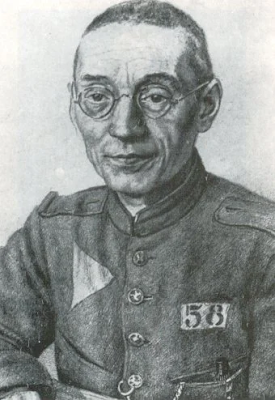
Gebed van pater Titus Brandsma uit de gevangenis
O, Jezus, als ik U aanschouw
Dan leeft weer dat ik van U hou
En dat ook Uw hart mij bemint
Nog wel als Uw bijzondren vrind.
Al vraagt dat mij meer lijdensmoed
Och, alle lijden is mij goed
Omdat ik daardoor U gelijk
En dit de weg is naar Uw Rijk
Ik ben gelukkig in mijn leed
Omdat ik het geen leed meer weet,
Maar ’t alleruitverkorenst lot
Dat mij vereent met U, o God.
0 laat mij hier maar stil alleen
Het kil en koud zijn om mij heen
En laat geen mensen bij mij toe
’t Alleen zijn word ik hier niet moe.
Want Gij. O Jezus, zijt bij mij
Ik was U nimmer zo nabij.
Blijf bij mij, bij mij, Jezus zoet,
Uw bijzijn maakt mij alles goed
woensdag 26 juli 2023
The story of Sainte Anne de Beaupré Canada and her present relics in this sanctuary

Devotion to Saint Anne, in Canada, goes back to the beginning of New France, and was brought thither by the first settlers and early missionaries. The hardy pioneers soon began to till the fertile soil of the Beaupré hillside; in the region which now forms the parish of Sainte Anne de Beaupré the first houses date from the year 1650. Nor was it long before the settlers built themselves a chapel where they might meet for Divine worship. One of their number, the Sieur Etienne Lessard, offered to give the land required at the spot which the church authorities should find suitable. On 13 March, 1658, therefore, the missionary, Father Vignal, came to choose the site and to bless the foundation of the proposed chapel which, by general consent, was to be dedicated to St. Anne. The very day the Saint showed how favourably she viewed the undertaking by healing Louis Guimont, an inhabitant of Beaupré, who suffered terribly from rheumatism of the loins. Full of confidence in St. Anne, he came forward and placed three stones in the foundations of the new building, whereupon he found himself suddenly and completely cured of his ailment.
This first authentic miracle was the precursor of countless other graces and favours of all kinds. For two centuries and a half the great wonder-worker has ceaselessly and lavishly shown her kindness to all the sufferers who from all parts of North America flock every year to Beaupré to implore her help. The old church was begun in 1676, and used for worship until 1876, when it was replaced by the present one, opened in October of that year. This last was built of cut stone, by means of contributions from all the Catholics of Canada. The offerings made by pilgrims have defrayed the cost of fittings and decoration. It is two hundred feet long, and one hundred wide, including the side chapels. Leo XIII raised it to the rank of a minor basilica 5 May, 1887; on 19 May, 1889, it was solemnly consecrated by Cardinal Taschereau, Archbishop of Quebec. It has been served by the Redemptorists since 1878. On either side of the main doorway are huge pyramids of crutches, walking-sticks, bandages, and other appliances left behind by the cripples, lame, and sick, who, having prayed to St. Anne at her shrine, have gone home healed.
Relics
The Shrine has in its possession three notable relics.
Pilgrimage
The pilgrimage to Beaupré has not always had the importance which it has gained in our time. Only in the last quarter of the nineteenth century did it attain to the growth, organization, and fame which now render it comparable with the great pilgrimages to Lourdes. Until 1875 the yearly number of pilgrims did not exceed 12,000, but to judge by the heap of crutches left at the saint's feet, there must always have been many marvellous cures wrought at Beaupré. More favourable conditions — including the strong impulse given by Cardinal Taschereau and his suffragans, the zeal of the Canadian clergy in organizing pilgrimages, improved modes of transportation, and the monthly "Annales de la Bonne Sainte Anne" — made possible the truly wonderful growth of these pilgrimages in the early twentieth century. Devotion to St. Anne is today more than ever the devotion of the Canadians.
dinsdag 25 juli 2023
A Famous Medieval Relic of St James the Greater in Pistoia
sources and full version: new liturgical movement and pistoiajacobeo.it
Pistoia is intensely tied to its tradition of pilgrimages, proof of which can be found in historical documents, monuments and the city’s works of art. As of the 12th century, the town became the only officially recognised centre of the cult of Saint James in Italy when bishop Atto managed that a relic arrived from Santiago de Compostela in 1145. The relic was a fragment of the skull of the apostle James the Great – Giacomo il Maggiore, or Jacopo as he is also called in Italian – who was proclaimed Patron Saint of Pistoia.
Pilgrims on their way to Rome or to Santiago de Compostela could easily reach Pistoia as the town was well-connected with the Via Francigena, so they could visit the Chapel of Saint James, venerate the relic and pray for God’s grace by the intercession of the apostle.
In the second half of the 12th century, in order to assist pilgrims, an institution called Opera di San Jacopo was set up near the cathedral and next to the Bishop’s Palace. Its task was to look after and supervise the cult of the saint and administrate the Saint James’ Treasure
Hospices for pilgrims, for the poor and for wayfarers were built in town, among which were the Hospital of Saint James (mid 12th century), and the better known Spedale del Ceppo (late 13th century) which specialised in nursing the sick and later became the town’s main hospital. In the second half of the 14th century, the Tau hospice and hospital were founded and were of particular importance for the treatment of shingles.

In the year 1780, Pistoia suffered the terrible misfortune of receiving as its bishop one Scipione de’ Ricci, a creature of the Grand Duke of Tuscany. It was he who called the infamous Synod of Pistoia, whose program for liturgical reform (inter alia) was condemned in 1794 by Pope Pius VI beatae memoriae in the bull Auctorem Fidei. On the fatuous pretext that devotion to St James was distracting people from the Eucharist, since the chapel of the latter always had more candles lit around it, the entire chapel of St James was destroyed. A groove on a column at the back of the church is one of the few remaining signs of its presence.
25 July - St. James the Greater